2D materials
Since 2004, the year of the pioneering publication by Geim and Novoselov on graphene and its exceptional properties, interest in the study and pursuit of applications
for 2D materials has continuously grown. These materials not only possess unique properties that differ from those of bulk materials, but these properties can also be
modified based on the substrates on which they are supported or synthesized.
Various experimental techniques have been developed or adapted to study these materials, including Scanning Tunneling Microscopy (STM), Atomic Force Microscopy (AFM),
Auger Electron Spectroscopy (AES), Low-Energy Electron Diffraction (LEED), Thermal Desorption Spectroscopy (TDS), Angle-Resolved Photoemission Spectroscopy (ARPES),
X-ray Photoelectron Diffraction (XPD), and Reflection High-Energy Electron Diffraction (RHEED). However, a comprehensive understanding of the results obtained from these
techniques, as well as the ability to extract maximum information from them, requires computational tools that can accurately describe these materials and their chemical
and physical properties.


Related publications
21. Defect identification in monolayer MoTe2 through tunneling tip-induced charging and theoretical analysis.
Pablo Casado, Michele Pisarra, Fabian Calleja, Cristina Díaz, Fernando Martín, Amadeo L. Váazquez de Parga and Manuela Garnica.
Nanoscale Advances, 7 5637 (2025).
20. Jumping Dynamics of Cyanomethyl Radicals on Corrugated Graphene/Ru(0001) Substrates.
Michele Pisarra, Juan Jesús Navarro, Cristina Díaz , Fabián Calleja, Amadeo L. Vázquez de Parga, Fernando Martín.
Journal of Physical Chemistry C, 128 21408 (2024).
19. Graphene grown on transition metal substrates: Versatile templates for organic molecules with new properties and structures.
Cristina Díaz, Fabián Calleja, Amadeo L. Vázquez de Parga, Fernando Martín.
Surface Science Reports (2022) 77 100575 (2022).
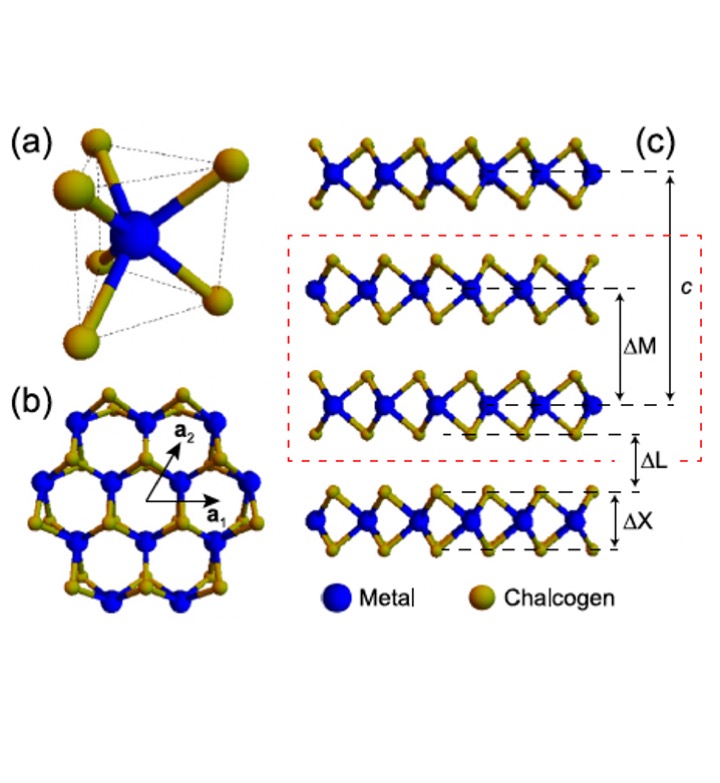
18. Theoretical study of structural and electronic properties of 2H-phase transition metal dichalcogenides.
M. Pisarra, C. Díaz , F. Martín.
Physical Review B 103 195419 (2021).
17. Evaluation of the role of graphene-based Cu(I) catalysts in borylation reactions.
M. Franco, R. Sainz, A. M. Lamsabhi, C. Díaz , M. Tortosa, M. B. Cid.
Catalysis Science & Technology 11 3501 (2021).
16. Defect formation in a graphene overlayer on ruthenium under high pressure.
M. Pisarra, C. Díaz , F. Martín.
Physical Review B 102 075406 (2020.)
15. Local tuning of graphene electronic properties upon ultrahigh pressures.
P. Ares, M. Pisarra, P. Segovia, C. Díaz , F. Martín, E. G. Michel, F. Zamora, C. Gómez-Navarro, and J. Gómez-Herrero.
Advanced Funtional Materials 1806715 (2019).
14. Graphene catalyzes the reversible formation of a C-C bond between two molecules.
J.J. Navarro, M. Pisarra, B. Nieto-Ortega, J. Villalva, C. Díaz , F. Calleja, R. Miranda, F. Martín, E. M. Pérez, and A. L. Vázquez de Parga.
Science Advances 4 9366 (2018).
13. Electronic properties of sulfur covered Ru(0001) Surfaces.
M. Pisarra, C. Díaz , R. Bernardo-Gavito, J. J. Navarro, A. Black, F. Calleja, D. Granados, R. Miranda, A. L. Vázquez de Varga and F. Martín.
The Journal of Physical Chemistry A 122 2231-2240 (2018).
12. Coverage evolution of the unoccupied Density of States in sulfur superstructures on Ru(0001).
M. Pisarra, R. Bernardo-Gavito, J. J. Navarro, A. Black, C. Díaz , F. Calleja, D. Granados, R. Miranda, F. Martín and A. L. Vázquez de Varga.
Applied Surface Science 433 300 (2018).
11. A DFT study of Cu nanoparticles adsorbed on defective graphene.
D. E. García-Rodríguez, L. H. Mendoza-Huizar and C. Díaz.
Applied Surface Science. 412 146 (2017)
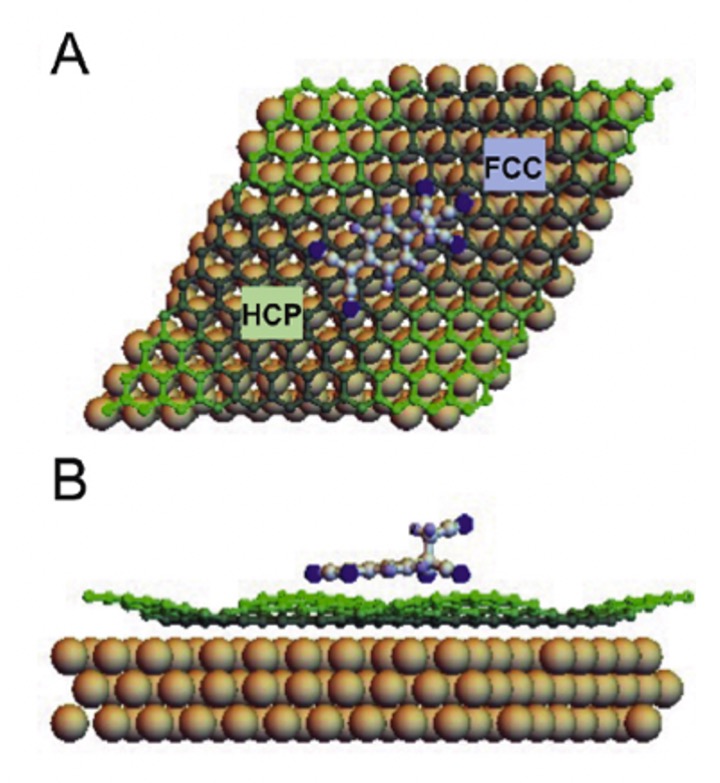
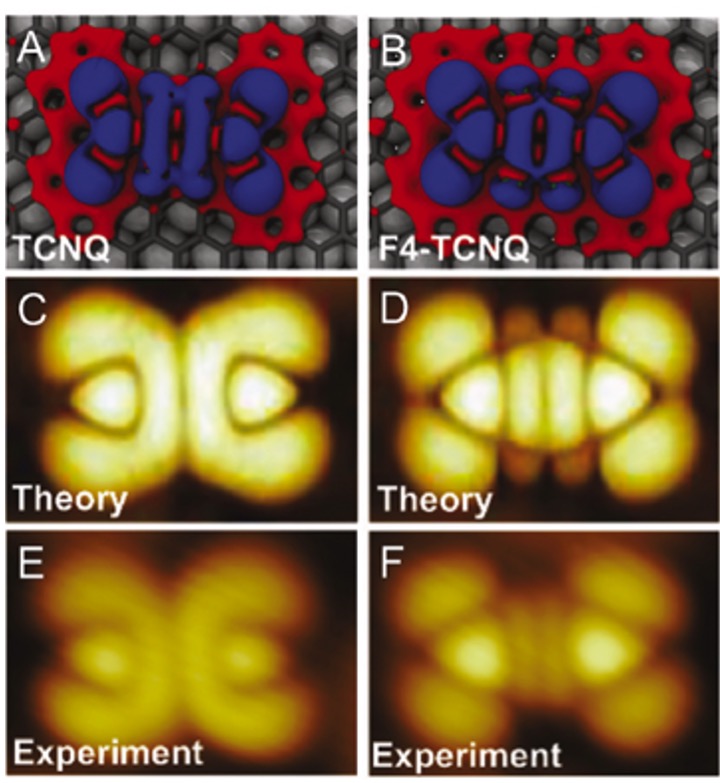
10. Understanding the seft-assembly of TCNQ on Cu(111): a combined sutdy based on scanning tunneling microscopy esperiments and density functional theory simulations.
D. Stradi, D. Borca, S. Barja, M. Garnica, C. Díaz , J. M. Rodríguez-García, M. Alcamí, A. L. Váquez de Parga, R. Miranda, F. Martín.
RSC Advances, 6 15071 (2016).
9. Assesing the reliability of van der Waals DFT functionals to study the physisorption of molecular hydrogen on aromatic systems.
C. Díaz .
Theoretical Chemistry Accounts, 134 105 (2015).
8. Controlling the spatial arrangement of organic magnetic anions adsorbed on epitaxial graphene on Ru(0001).
D. Stradi, M. Garnica, C. Díaz , F. Calleja, S. Barja, N. Martín, M, Alcamí, A. L. Vazquez de Parga, R. Miranda and F. Martín.
Nanoscale, 6 15271 (2014).
7. Probing the Site-Dependent Kondo Response of Nanostructured Graphene with Organic Molecules.
M. Garnica, D. Stradi, F. Callejo, S. Barja, C. Díaz , M. Alcamí, A. Arnau, A. L. Vázquez de Parga, F. Martín and R. Miranda.
Nano Letters, 14 4560-4567 (2014).
6. Lattice-marched versus lattice-mismatched models to describe epitaxial monolayer graphene on Ru(0001).
D. Stradi, S. Barja, C. Díaz, M. Garnica, B. Borca, J. J. Hinarejos, D. Sánchez-Portal, M. Alcamí, A. Arnau, A. López-Vázquez de Parga, R. Miranda and F. Martín.
Physical Review B, 88245401 (2013).
5. Ordered arrays of metal-organic magnets at surfaces.
S. Barja, D. Stradi, B. Borca, M. Garnica, C. Díaz, M. Rodríquez-Garcíz, M. Alcamí, A. López-Vázquez de Parga, F. Martín and R. Miranda.
Journal of Physics: Condensed Matter, a24354002 (2013).
4. Long-range magnetic order in a purely organic 2D layer adsorbed on epitaxial graphene.
M. Garnica, D. Stradi, A. Barja, F. Calleja, C. Díaz, M. Alcamí, N. Martín, A. López-Vázquez de Parga, F. Martín and R. Miranda.
Nature Physics, 9 368 (2013).
3. Elastic Response of Graphene Nanodomes.
A. Koch, D. Stradi, E. Gnecco, A. Barja, S. Kawai, C. Díaz, M. Alcamí, F. Martín, A. López-Vázquez de Parga, R. Miranda, T. Glatzel and E. Meyer.
ACS Nano, 7 2927 (2013).
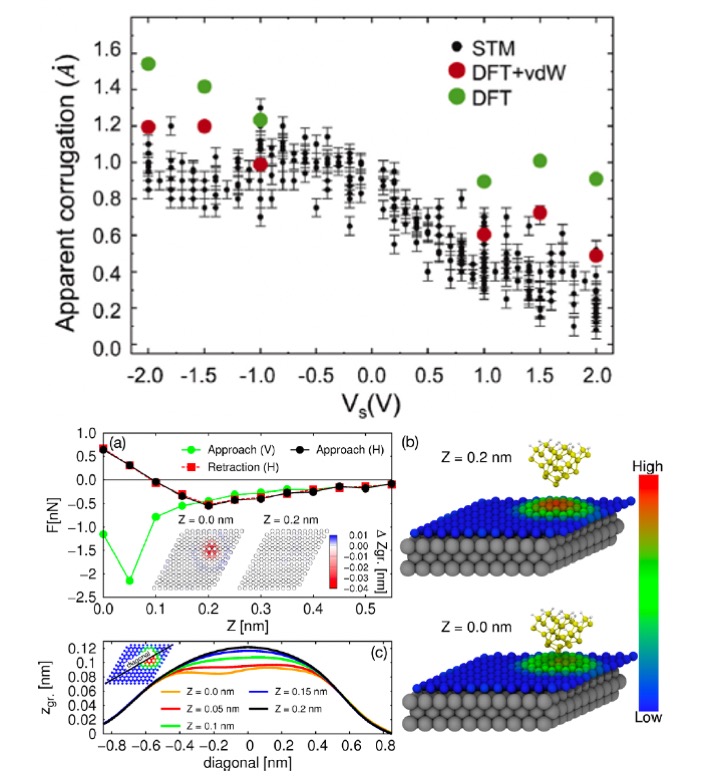
2. Electron localization in epitaxial graphene on Ru(0001) determined by moiré corrugation.
S. Stradi, S. Barja, C. Díaz, M. Garnica, B. Borca, J. J. Hinarejos, D. Sánchez-Portal, M. Alcamí, A. Arnau, A. L. Vázquez de Parga, R. Miranda and F. Martín.
Physical Review B, 85 121404(R) (2012).
1. Role of dispersion forces in the structure of graphene monolayers over Ru surfaces.
D. Stradi, S. Barja, C. Díaz, M. Garnica, B. Borca, J. J. Hinarejos, D. Sánchez-Portal, M. Alcamí, A. Arnau, A. L. Vázquez de Parga, R. Miranda and F. Martín.
Physical Review Letters, 106 186102 (2011).